
Preparing for Virtual Job Interviews in Immersive Work Environments
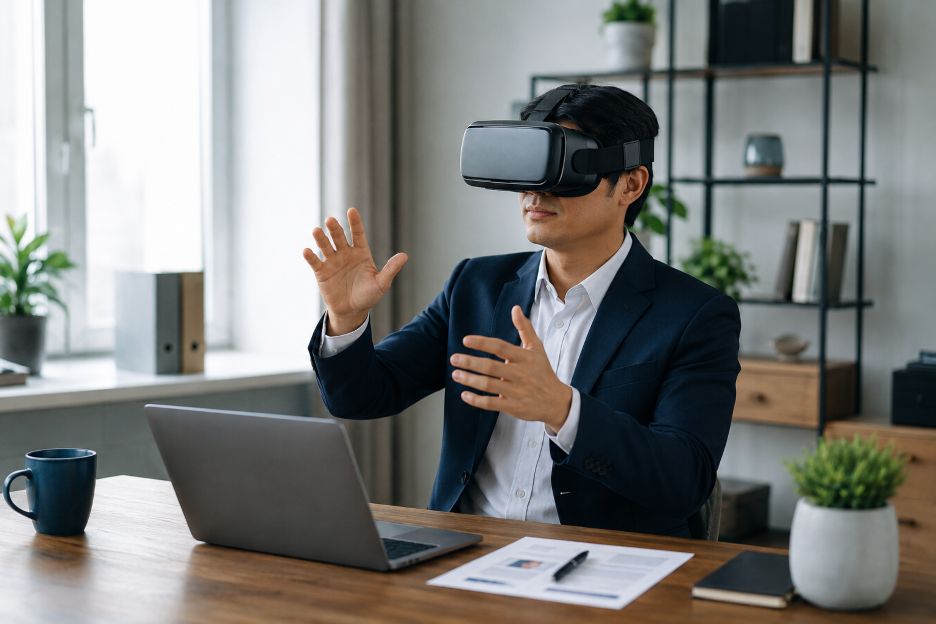
Virtual worlds are being developed for work, learning, collaboration, and skills practice. The European Commission identifies employment and training among their practical uses, while also raising accessibility, privacy, and worker-rights questions. An immersive interview changes the setting, but it does not erase the need for accurate qualifications, relevant examples, and clear communication.
Preparation begins before a headset is switched on. Candidates still need a resume aligned with the vacancy, strong examples, and a portfolio available outside the simulation. AI-based tools like Reztune can assist with tailoring a resume before a virtual interview, but every edit should match the person’s real experience. An OECD review warns that gaming automated screening or inserting fictitious details can weaken trust.
Traditional Preparation Versus Immersive Preparation
A conventional plan covers employer research, role analysis, rehearsed answers, suitable clothing, and equipment tests. Those steps remain useful in VR. Candidates may also need to navigate a three-dimensional space, control an avatar, handle virtual objects, respond to spatial audio, or complete a simulated task while speaking.
That layer makes technical rehearsal important. Learn the controls, confirm headset comfort, test internet stability, charge devices, set safe boundaries, and close distracting applications. Join early to correct tracking or audio problems. Identify any desktop alternative and keep the recruiter’s contact details nearby.
Behavioral rehearsal also changes. Traditional practice emphasizes eye contact, voice, posture, and answer structure. VR may expose turn-taking, orientation toward speakers, object use, and reactions during a scenario. PwC‘s soft-skills study found greater focus and emotional connection in VR than in classroom or e-learning formats. It studied training, however, not hiring outcomes.
What Each Format Can Reveal
Traditional interviews are efficient for discussing employment history, motivation, judgment, and role knowledge. They are familiar to most applicants and generally require less specialized equipment. However, answers can stay abstract. A polished account of teamwork does not always show how someone collaborates when priorities shift.
An immersive assessment can place candidates in a realistic activity, such as presenting to a client or responding to a service problem. Peer-reviewed research indexed by the U.S. National Library of Medicine has evaluated VR job-interview training, showing that simulated practice can be studied as a structured method.
Yet motion sensitivity, disability, limited hardware, unfamiliar controls, or poor connectivity may affect performance. The U.S. Equal Employment Opportunity Commission cautions that software and automated assessments can create disability-related barriers. Candidates needing adjustments should ask early about accessible controls, captions, a seated mode, or an equivalent non-VR assessment.
Resumes, Portfolios, and Digital Identity Still Matter
An avatar may shape an impression, but it cannot replace evidence. A resume records roles, accomplishments, education, and skills. A portfolio provides deeper proof through samples, case studies, code, presentations, or project outcomes. The OECD‘s 2025 skills-first report describes resumes, assessments, professional networks, and digital credentials as complementary signals.
Keep these materials consistent. Dates and titles should agree across the resume and profiles. Portfolio items should identify the problem, personal contribution, process, and verifiable result. Prepare lightweight files for virtual displays, but send an accessible web or PDF version beforehand so evidence remains available if the platform fails.
Digital identity requires judgment. Choose an avatar, display name, voice setting, and background that follow instructions without misrepresentation. Before using an unfamiliar platform, reviewing community feedback on immersive experiences may help candidates identify recurring concerns involving comfort, controls, tracking, and usability. Keep personal information out of usernames and room captures. Ask whether the session is recorded, what behavioral data is collected, who can access it, and how long it is retained.
A Practical Combined Checklist
- Tailor and fact-check the resume against the job description.
- Select two or three portfolio examples that demonstrate required skills.
- Prepare concise situation, action, and result stories.
- Practice movement, object handling, audio, and avatar controls.
- Test hardware, connection, boundaries, comfort, and an alternative access method.
- Confirm assessment rules, recording practices, accommodations, and recruiter contacts.
Where AI and VR May Meet
Future hiring systems may combine AI-assisted document preparation with immersive simulations that let candidates demonstrate selected abilities. AI could help organize evidence, generate practice questions, or offer feedback, while VR could provide a setting for rehearsing conversations and job tasks. The EEOC notes that automated systems are increasingly involved in recruitment and hiring, which makes transparency, human oversight, accessibility, and bias testing essential.
The strongest preparation strategy is therefore blended. Candidates should preserve the disciplined research and truthful documentation used for conventional interviews, then add platform fluency, spatial awareness, privacy checks, and contingency planning. Immersion may make an interview feel more lifelike, but sound hiring should still connect every digital interaction to relevant job requirements. Candidates should therefore judge each new feature by a practical question: does it help employers understand relevant ability while giving every applicant a fair, accessible, and clearly explained opportunity to demonstrate that ability? AI and VR can complement human judgment when they clarify skills and expand practice, rather than becoming substitutes for evidence, fairness, or a genuine conversation.


