
Page Creation Service for Wikipedia and the Expanding Impact of Virtual Reality
In a world shaped by rapid technological evolution, information and immersion go hand in hand. A page creation service for Wikipedia plays a vital role in documenting technological progress, offering credible and accessible information about new innovations like Virtual Reality (VR). As this immersive technology evolves, accurate and up-to-date online content becomes crucial to help people understand its global influence. Wikipedia pages crafted with precision ensure that verified knowledge about VR’s applications, history, and milestones remains publicly available and factually consistent.
When maintained by experts, a page created for Wikipedia not only safeguards digital credibility but also mirrors VR’s mission, to make complex experiences easily accessible to everyone.
Beyond Entertainment and Gaming
Initially, Virtual Reality was synonymous with gaming. However, its potential has since transcended entertainment, branching into education, healthcare, architecture, and even therapy. In classrooms, VR allows students to explore historical sites or conduct virtual science experiments without physical boundaries. Medical professionals use VR to simulate surgeries, improving training precision and patient outcomes. The technology has evolved from a niche gadget into a tool that redefines how humans interact with data, space, and emotion.
How a Page Creation Service for Wikipedia Keeps Innovation Documented?
The evolution of VR deserves accurate chronicling. Through a Wikipedia page, technological breakthroughs are recorded with reliable sources and structured narratives that foster global understanding. Much like VR enhances the way users experience information,
Wikipedia ensures that such knowledge remains free and unbiased. The structured, citation-driven process used in page creation mirrors the precision required in coding immersive environments.
Rise of VR in Communication and Collaboration
VR’s capacity to replicate real-world interactions is reshaping communication. Virtual meetings, 3D social platforms, and immersive workspaces now allow people from different continents to collaborate as if they were side by side. This transformation breaks down geographical barriers, enabling inclusivity and emotional connection beyond video calls. The accessibility of these environments depends not only on technology but also on the availability of verified resources that explain their functionality.
Revolutionizing Industries through Immersive Design
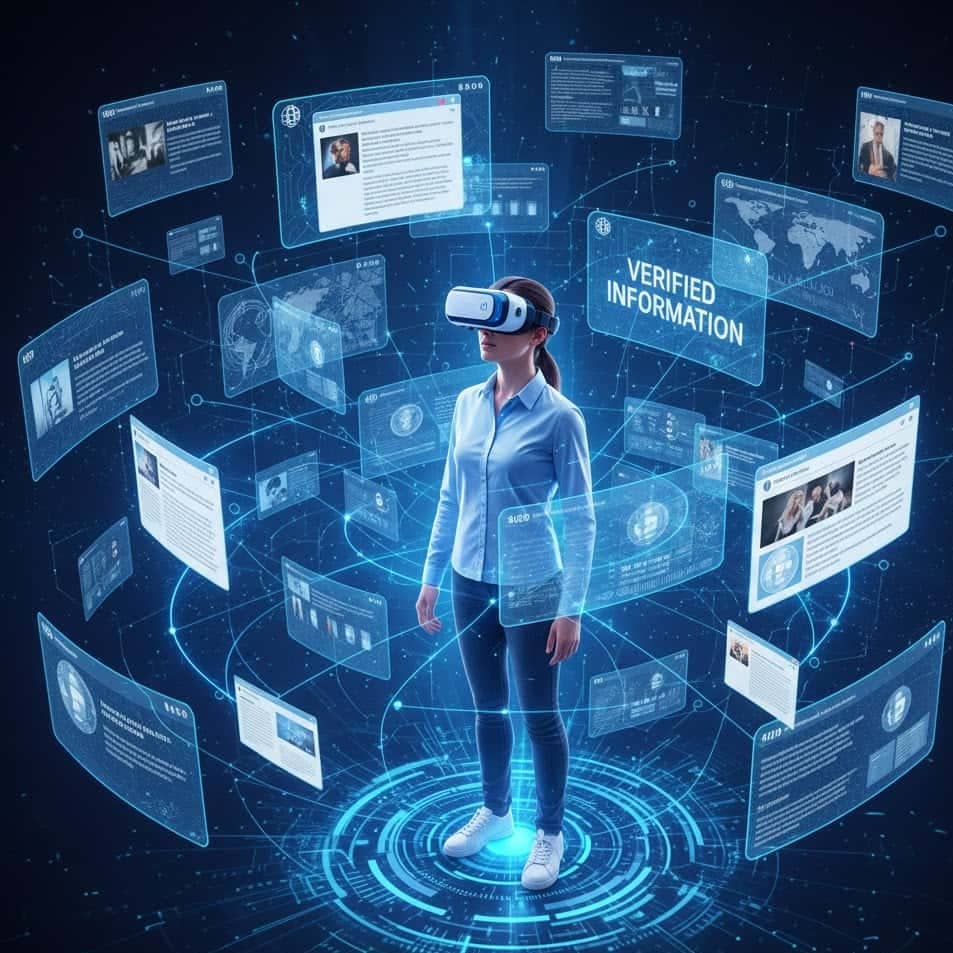
From real estate walkthroughs to automotive prototypes, VR has revolutionized how industries present and test products. Businesses can visualize outcomes, make data-driven decisions, and minimize costly trial-and-error processes.
In tourism, users can explore destinations before booking flights, while artists can sculpt, paint, and compose in fully immersive studios. The applications continue to expand as hardware improves, leading society toward a more interactive, sensory-driven digital age.
Virtual Reality and the Reimagining of Human Experience
At its core, VR is changing the way humans perceive reality itself. It offers empathy-driven experiences, such as simulating life in another person’s perspective or recreating cultural moments otherwise lost to time.
As VR continues to influence global culture, technology, and psychology, ensuring the documentation of its evolution through trusted digital archives remains crucial. The synergy between innovation and information, between immersive experience and credible documentation, continues to define how the modern world learns, connects, and grows.


