
Smartphone-Based VR vs. Standalone VR Headsets: Understanding the Hardware and Performance Differences
Virtual reality technology has evolved from expensive computer-connected systems into more accessible consumer devices. Smartphone-based VR helped introduce immersive experiences to wider audiences through affordable viewers such as Google Cardboard. Users could place compatible phones inside simple headsets and explore virtual environments without purchasing dedicated gaming hardware.
Today, standalone VR headsets offer more advanced features, but smartphones remain useful for basic immersive applications. Hardware comparisons can help users understand these differences. Resources such as mobile phones at CompareCelular (celulares no CompareCelular) provide smartphone specifications for evaluating processors, displays, and other components. However, choosing between smartphone VR and standalone hardware requires examining more than technical specifications.
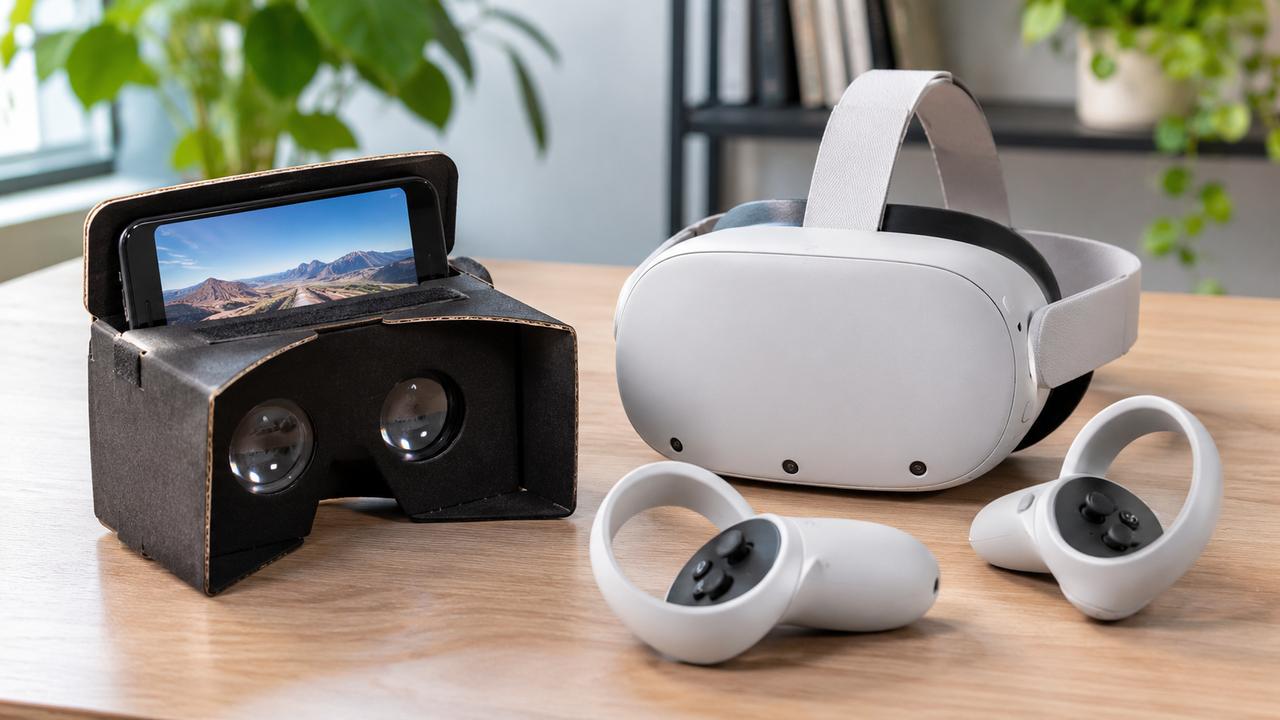
How Did Smartphone VR Make Immersive Technology Accessible?
Early smartphone VR systems relied on hardware people already owned. A compatible phone provided the screen, processor, and motion sensors, while an inexpensive viewer supplied lenses and a mounting frame.
Google introduced Cardboard as an accessible platform supporting Android and iOS devices. Its technology uses smartphone sensors to detect head movements and display stereoscopic images. Users can explore virtual scenes by turning their heads, although interaction remains relatively limited.
This approach reduced entry costs and encouraged experimentation with virtual tours, educational demonstrations, and immersive videos.
However, smartphone VR was constrained by hardware designed primarily for everyday mobile applications rather than sustained immersive rendering.
What Changes When Processing Moves Into a Dedicated Headset?
Standalone headsets contain processors, displays, batteries, cameras, and tracking systems inside integrated hardware. Their components are designed around virtual reality workloads.
For example, Qualcomm developed the Snapdragon XR2 Gen 2 platform for extended reality applications. It supports features such as spatial tracking and immersive graphics processing.
Meanwhile, Meta identifies the Snapdragon XR2 Gen 2 as the processor used in its Quest 3 and Quest 3S headsets.
Smartphones can still produce convincing three-dimensional visuals. However, demanding applications compete with background processes and thermal limitations. Dedicated headsets generally provide a more consistent environment for complex VR software.
Display Resolution and Refresh Rates
Display quality affects how clear and comfortable virtual environments appear. Higher resolution can reduce visible pixels, while faster refresh rates support smoother movement.
Smartphone VR divides the phone’s screen into separate images for each eye. The resulting sharpness depends on pixel density, lenses, rendering resolution, and screen dimensions.
Meta lists the Quest 3 at 2,064 by 2,208 pixels per eye, with standard application refresh rates reaching 120 Hz. Smartphone displays may advertise similarly impressive specifications, but these figures do not guarantee equivalent VR performance.
Rendering quality, optical design, and consistent frame delivery remain equally important.
Motion Tracking and Latency
Tracking represents another major difference. Traditional smartphone viewers generally provide three degrees of freedom, allowing users to look around without accurately tracking physical movement through space.
Standalone headsets commonly provide six degrees of freedom. This enables users to move forward, backward, sideways, and vertically while the virtual environment responds.
Google Research has examined latency and simulator sickness in smartphone VR. Its findings highlight the relationship between delayed visual updates and sensory discomfort, although individual responses vary.
Dedicated tracking cameras and motion controllers also allow standalone systems to support more interactive experiences.
Why Smartphone-Based VR Still Matters
Smartphone VR offers practical advantages despite its technical limitations. The most important is affordability for people who already own compatible devices.
Additional benefits include:
- Lower initial hardware expenses when using simple viewers.
- Portable equipment suitable for occasional demonstrations.
- Access to compatible immersive photographs and 360-degree videos.
- Opportunities to introduce students to basic virtual environments.
These benefits make smartphone VR useful for audiences who want brief immersive experiences without investing in specialized equipment.
However, compatibility remains an important concern. Google Cardboard Help explains that some phones lack the gyroscope required for effective head tracking. Viewer dimensions and software support can create additional restrictions.
Where Standalone VR Provides a Different Experience
Standalone headsets typically offer stronger interaction capabilities and more developed application ecosystems.
Motion controllers, hand tracking, and room-scale positioning support activities that conventional smartphone viewers cannot easily reproduce. These include interactive training, physical games, and detailed three-dimensional simulations.
As these experiences become more realistic, developers must also consider the ethical considerations in virtual reality simulations, particularly when immersive environments involve sensitive situations, emotional responses, or realistic human interactions.
Meta documents controller and hand-tracking support across its Quest product line. Such features allow developers to create experiences involving movement, object manipulation, and spatial interaction.
Nevertheless, standalone devices require a separate purchase. Their additional components increase cost, while headset weight, charging requirements, and physical comfort remain practical considerations.
How Much Do Smartphone Specifications Really Matter?
Smartphone hardware strongly influences VR performance, particularly when applications render interactive three-dimensional environments.
Processing Power, Sensors, and Heat
A capable graphics processor helps maintain stable frame rates. High-resolution displays improve potential image clarity, while gyroscopes and accelerometers help detect head orientation.
Thermal management matters because sustained graphics processing generates heat. Performance may decline when a phone reduces processing speed to control temperatures.
Battery consumption also increases during demanding applications because the screen, processor, and sensors operate continuously. Standalone systems face similar power constraints, although their batteries serve dedicated headset hardware.
Specifications can therefore help narrow potential choices. They cannot independently confirm whether a particular viewer, operating system, or VR application will function correctly.
Which VR Approach Makes More Sense Today?
Smartphone-based VR remains practical for occasional 360-degree viewing, simple educational content, and introductory demonstrations. Its affordability and familiar hardware make it accessible, provided compatible applications remain available.
Standalone headsets are generally better suited to interactive gaming, spatial training, and experiences requiring precise tracking. Their dedicated hardware supports capabilities that traditional phone viewers lack.
Neither approach eliminates concerns involving battery life, comfort, and software compatibility. Ultimately, the appropriate choice depends on the experience users expect. As immersive technology develops, dedicated headsets will likely remain the stronger option for demanding applications, while smartphones can continue serving simpler educational and viewing needs.


